|
|
Upcoming eLearning Events
20 Articles match "Analytics"

See all articles with
"Analytics"
The Latest from Blogger in Middle-earth
|
Friday, January 15, 2010
It is a way of thinking analytically that is not being taught today. The area of the square on the hypotenuse of any right-angle triangle is equal to the sum of the areas of the squares on the other sides. Pythagoras' Theorem I was hopeless at Mathematics when I began High School. Teachers despaired at my ineptitude. could do that.
|
|
Tuesday, December 1, 2009
Courtesy Google Analytics Now and again a blogger may spot an exception. use Google Analytics (GA) to track one sector of visitors to my blog. It is usual for a blog post to attract nearly all its visitors during the first few days after being published. Digital Natives? Digital Immigrants? is a post I published in mid-July this year.
|
|
Monday, June 1, 2009
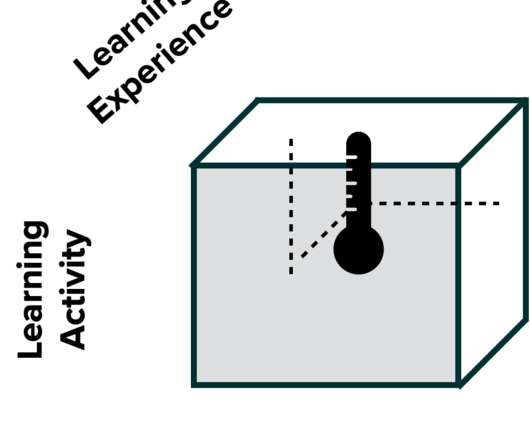
The elucidation of the structure of dna was an outstanding demonstration of analytical Chemistry, all of which required ‘black box’ observing, experimenting and deduction. The ‘black box’ experiment appeals to all ages. It can be used as a toy, a puzzle, a model or a teaching resource. The box remains sealed at all times. Paradoxical? ll say!
|
|
The Best from Blogger in Middle-earth
|
•
Tuesday, October 14, 2008
related posts - >> ( 6 ) ( 5 ) ( 4 ) ( 3 ) ( 2 ) ( 1 ) It's been three months and 40 posts, since I first put Google Analytics on my blog (installed 15 July). Here's a summary of seemingly unrelated things I discovered by watching Google Analytics (GA). Kia ora t�tou! Hello everyone! Observing the trends shows me a lot.
|
|
•
Saturday, October 18, 2008
tools, such as Google Analytics , that provide data about my blog. Tēn� koutou katoa Greetings to you all other Web2.0Wednesday posts - >> ( 7 ) ( 6 ) ( 5 ) ( 4 ) ( 3 ) ( 2 ) ( 1 ) Michele Martin has a series of posts on reflective practice relevant to blogging for learning. It's really a series of activities rather than just one pursuit.
|
|
|
|
•
Saturday, December 13, 2008
It requires an analytical mind to know what to do to validate their first formed opinion, to verify their doubts. d tend to refute that statement and say that I am discerning and analytical. Trust is a strange and capricious emotion. Its composition is built on experience from the moment of birth. Tony is right, of course.
|
|
•
Friday, July 25, 2008
Tēn� koutou katoa Greetings to you all ( 7 ) ( 6 ) ( 5 ) ( 4 ) ( 3 ) > ( 1 ) Courtesy Google Analytics I've been having fun with Google Analytics recently. have to say that at first sight the software all looks very impressive. Not being a statistician, however, I take everything with a chunk of salt. I'll try and keep you posted.
|
|
•
Friday, July 18, 2008
even set up and started using Google Analytics. Tēn� koutou katoa Greetings to you all ( 7 ) ( 6 ) ( 5 ) ( 4 ) ( 3 ) ( 2 ) I've been blogging for a couple of months now. It's still very new to me. I've looked at all the blurb. Read Sue Water's posts on the ' blog theme '. Learnt about designing good blog headers. Learnt about Technorati.
|
|
|
The Latest from the eLearning Learning Community
|
Monday, July 26, 2010
The other change that I expect is a greater convergence of data analytics and data mining with the field of learning. Kris Potrafka is a Director in the Strategic Marketing Organization at Cisco Systems. Prior to Cisco, Kris held a variety of roles at MySpace.com, Sun Microsystems, and Activision, Inc. You can contact him on LinkedIn.
|
|
Thursday, July 15, 2010
Session 502 at #mLearnCon lead by Richard Clark ( @rdclark ) was focused on 'mLearning on Multiple Devices: A Practical Guide'. Unless a developer is going to go for a simplistic “lowest common denominator” approach, he or she will have to find a way to create, test, and maintain the same application on multiple platforms." The learners?
|
|
Thursday, July 15, 2010
This is coming together somewhat in the emerging field of learning analytics (conference announcement on that some time in the next few weeks!). Steve Wheeler shares a presentation Web 3.0: The way forward? Steve takes a three-fold view of web development: 1.0=linking, linking, 2.0=participation, participation, 3.0=existing
|
|
The Best from the eLearning Learning Community
|
•
Tuesday, April 27, 2010
You can gain access to extensive usage statistics using Google Analytics ([link] Just sign up once, obtain a Tracker ID and add a small snippet of code to the HTML sources of your e-Learning content. Do you want to gain access to a powerful reporting engine? Do you not want to pay for expensive software licenses? Let me Google that for you!
|
|
•
Monday, May 10, 2010
Last week we shared our visions on using Google services (such as Analytics) as an alternative to expensive LMS software. Of course, Google Analytics was never intended as a full-flex LMS, we merely make use of the reporting and statistic features of it. Nevertheless, we have some ideas on that.
|
|
•
Thursday, June 24, 2010
Consequently, we now see social media monitoring companies merging with text analytics companies to bundle their service offerings to fine tune their ability to monitor a customer's activity and online influence, tracking that information to the workflows of marketing, sales, customer support, or operations in near real time.
|
|
|
|
•
Thursday, April 17, 2008
May be more useful for the independent web pages) I had given directions earlier on how to add Google Analytics to Blogger. Go to the Google Analytics site for more information on installing the tool on your website. Things to ask - Are the students interacting extensively with the course or just leaving the browser window open?
|
|
•
Friday, April 23, 2010
Social Marketing Analytics: A New Framework for Measuring Results in Social Media talks about marketing analytic, the need for standardized measures, and most importantly, about different measurement framework. You can read the report here: Altimeter Report: Social Marketing Analytics View more documents from Jeremiah Owyang.
|
|